
Onyx: making personal development visible in vocational education
Introducing ONYX
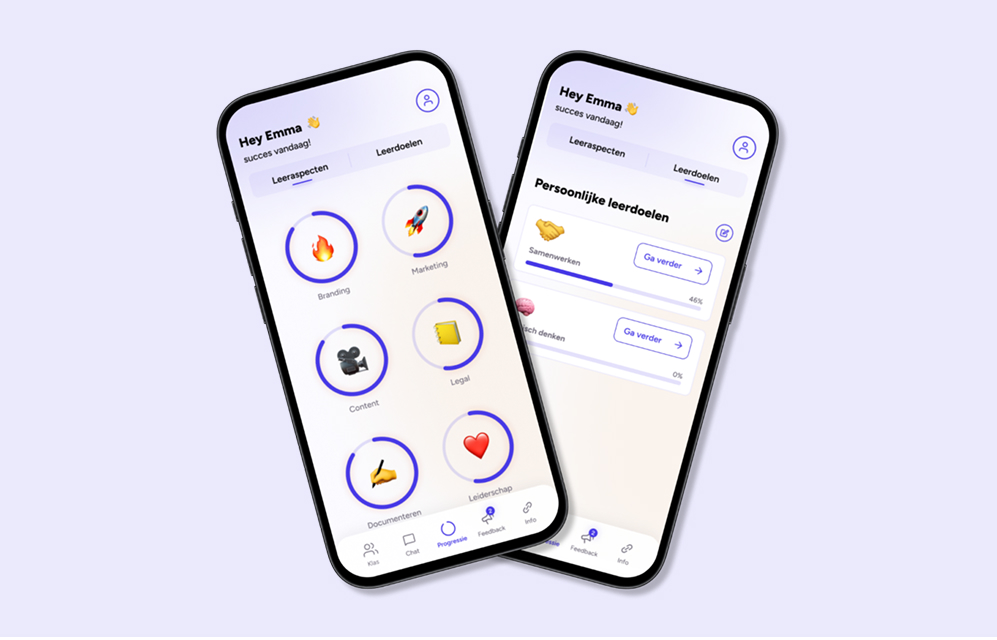
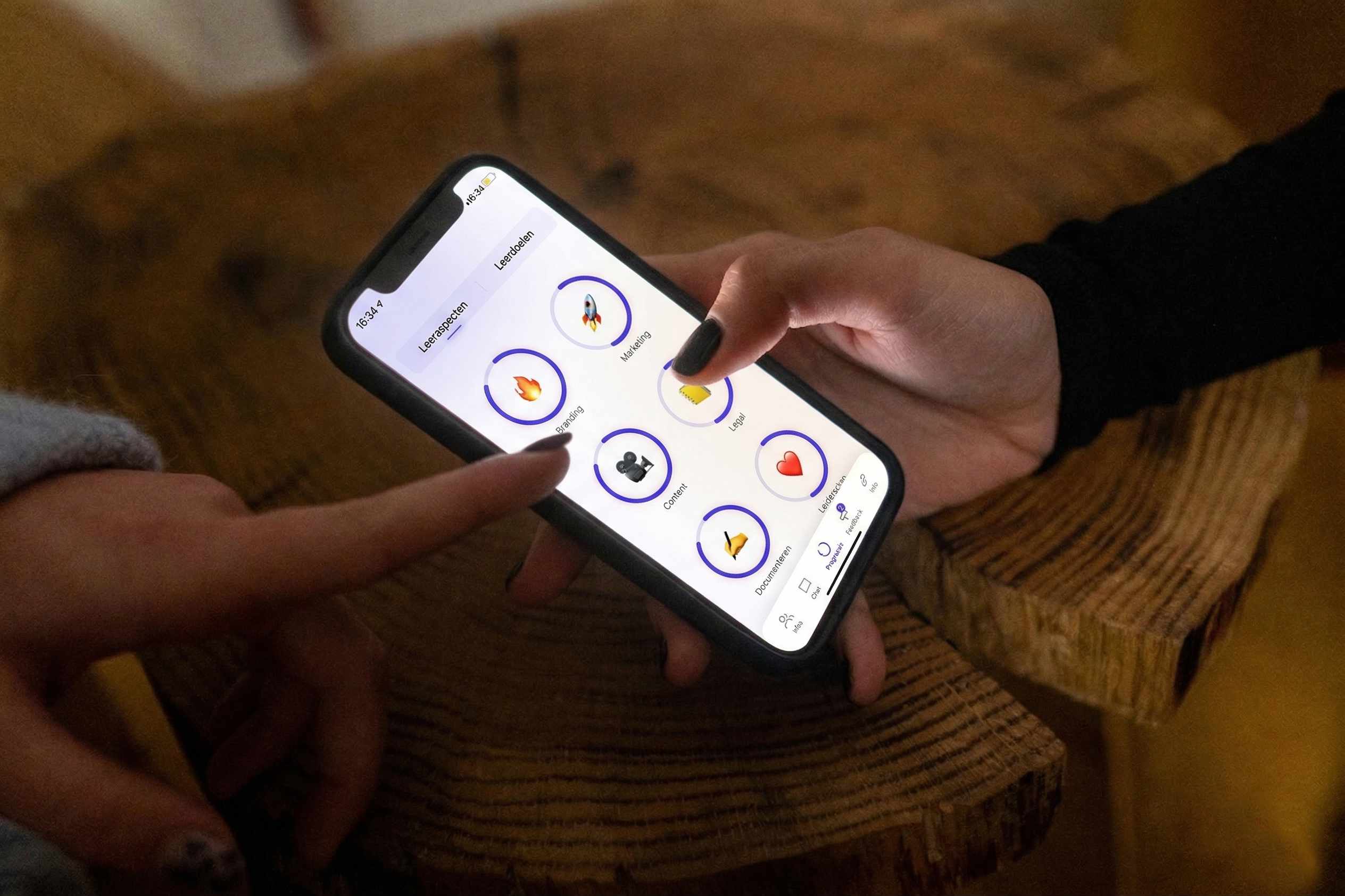
Before building anything, we sat with coaches and students at learning and development (L&D) companies. Not to ask what features they wanted, but to understand what actually happened during a coaching conversation. What we found: coaches gave valuable feedback, but it had no place to live. By the next session, it was gone. Students developed real skills but had no way to see or show that progress. The problem was never a lack of effort. It was a lack of shared visibility. So we built Onyx in co-creation with coaches and students. A platform and app where skill-based progress becomes something you can see, discuss, and build on.
How do you design for two very different users who need to meet in the middle?
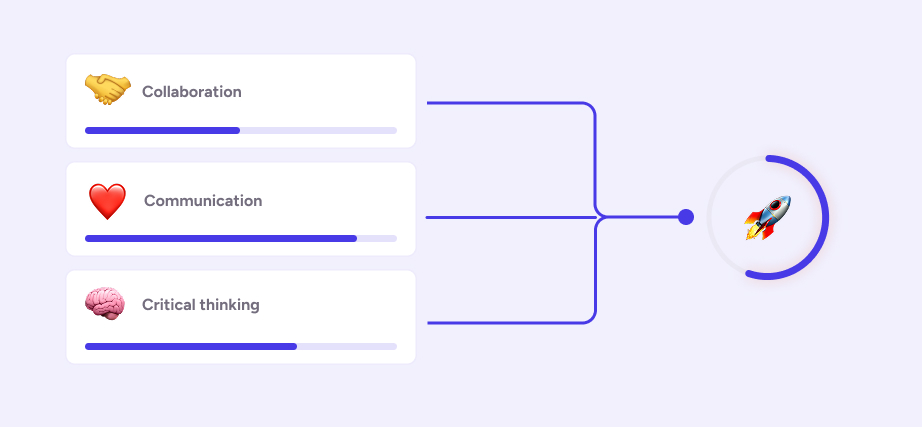
1. Make common goals visible
Students see which skills are growing, where they need more practice, and what to focus on next. This matters because research shows that when learners can track their own progress, they take more ownership of it. Visible growth changes behaviour.
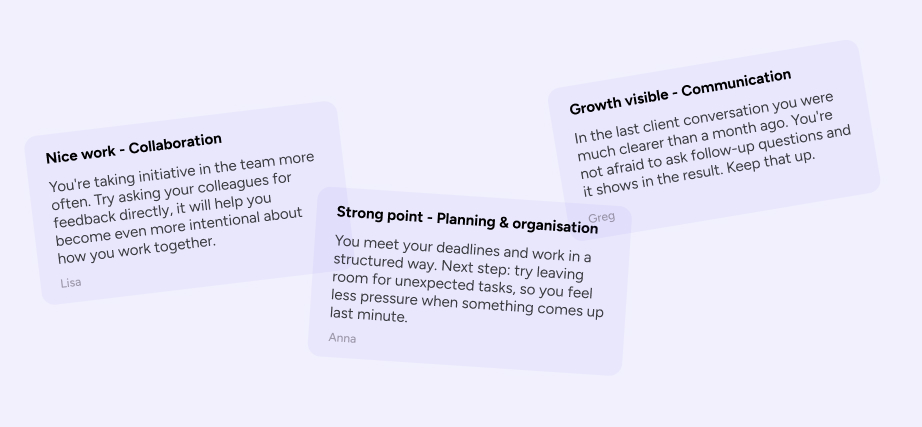
2. Create a feedback memory system
Coaches open a conversation with real information instead of memory. They see reflections, feedback history, and patterns over time. This solves a common problem in practice-based education: every coaching moment used to start from scratch. Now it picks up where the last one left off.
3. Convert and categorize
In most learning environments, verbal feedback is the most valuable kind and also the most fragile. It disappears after the conversation. Onyx gives feedback a place, connected to specific skills, so students can revisit it weeks later and see how far they've come since.
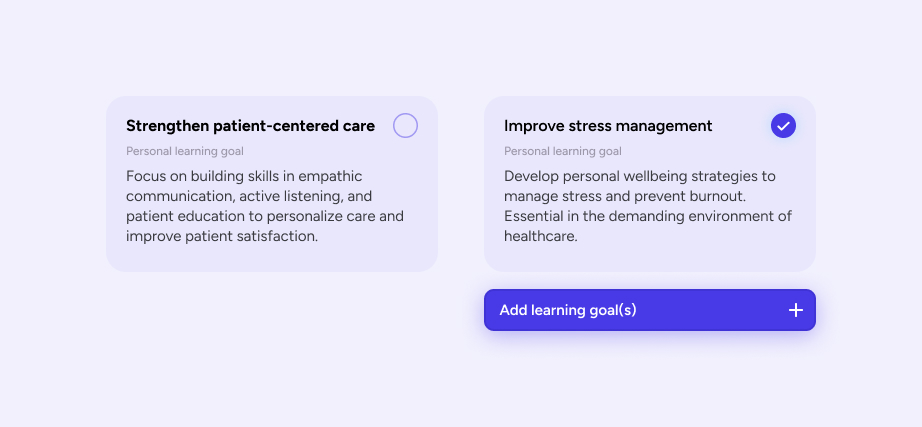
4. Ownership by design
When students can see their own development, something shifts. They stop waiting to be told what to work on. They start choosing. That's not a feature you build into a button. It's what happens when you give someone a clear view of where they are and trust them to act on it. Autonomy isn't taught. It's enabled.
Why making something visible is often the real intervention
There's a pattern we see across education projects. The biggest changes don't come from adding complexity. They come from making something visible that was already happening but couldn't be seen. With Onyx, that's skill-based learning progress. Once coaches and students share the same view, the dynamic shifts. Students stop waiting for feedback and start seeking it. Coaches move from guessing to guiding. Conversations get shorter and sharper because both sides already know the starting point. This is what skill-based learning looks like in practice. Not a new curriculum or a complicated framework. A clear view that turns invisible growth into something you can point to, talk about, and act on together.
Learn more

Future Ready partners with HvA and Stby to explore how robots can support autistic students
Together with HvA and Stby, we're exploring what robot interaction should look and feel like in education.

Why the best digital product might be one you barely use
Engagement doesn't equal impact. Value comes from solving the problem, not holding attention.
The European AI Act is in effect. Here's what actually matters.
It's not about checking boxes. It's about knowing what your AI actually does. Intro Text: Since August 2024, the AI Act is law in Europe. Most of what's been written about it reads like a compliance checklist. But the real question is simpler: do you know what your AI does, who it affects, and what happens when it's wrong?